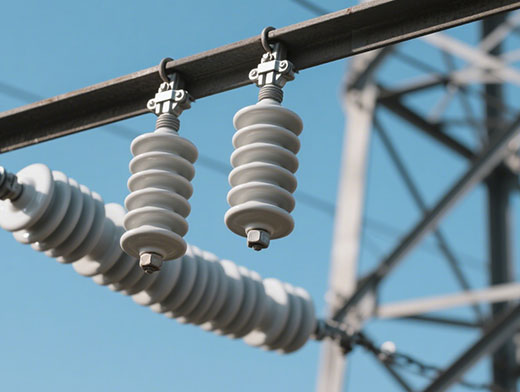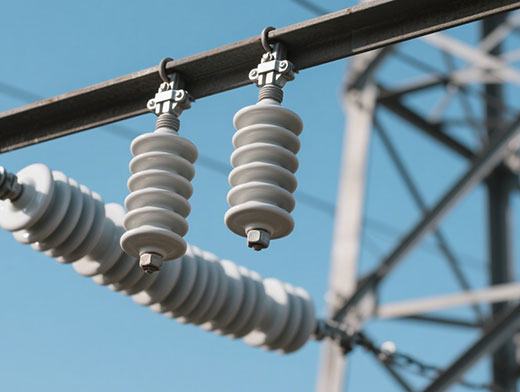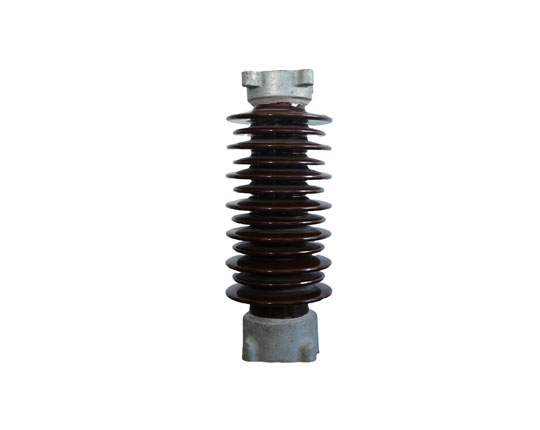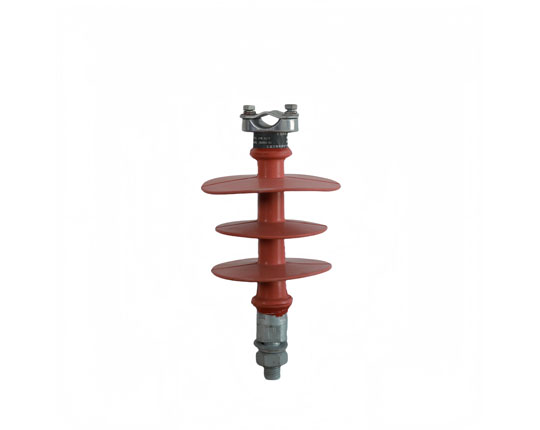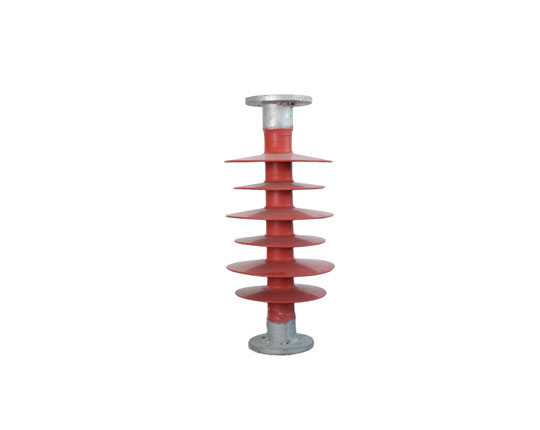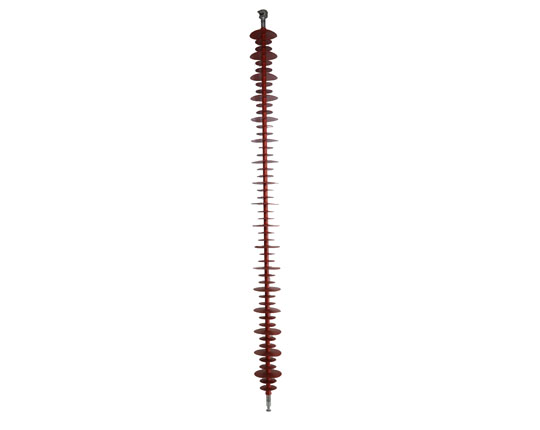


The conical or cylindrical structure has both crossarm support and insulation functions, which can replace the traditional metal/wood crossarm, reduce the height of the tower and simplify the structure. The main material of the cross arm insulator includes electric porcelain, composite material silicone rubber, and the surface is designed with corrugations to improve creepage distance and anti-fouling ability.
| Product model | Rated voltage(KV) | Rated bending load(KN) | Structure height (mm) | Minimum arc distance(mm) | Minimum creepage distance (mm) | Lightning impulse voltage (peak) (KV) | 1 min power frequency wet voltage (KV) |
| FSW-35/100 | 35 | 100 | 650 | 450 | 1015 | 230 | 95 |
30/36kV cross-arm Insulator used in overhead power lines to simultaneously serve the functions of insulation and supporting conductors. With dual roles of cross-arm and insulator, it is a device installed between conductors of different potentials or between conductors and grounding components, capable of withstanding voltage and mechanical stress. There are various types of cross arm insulators with different shapes. Although there are significant differences in the structure and appearance of different types of insulators, they are all composed of two main parts: insulation components and connecting fittings. Cross-arm Insulators are a special type of insulation control that can play an important role in overhead transmission lines. In the early years, insulators were mostly used for utility poles, but gradually developed to include many disc-shaped insulators hung at one end of high voltage power line connection towers to increase the creepage distance. They are usually made of glass or ceramic and are called insulators. Insulators should not fail due to various mechanical and electrical stresses caused by changes in environmental and electrical load conditions; otherwise, insulators will not have a significant effect and will damage the use and operating life of the entire line.