
Two crews. Same cable specification. Same voltage class. Same project.
Crew A used heat shrink. The installation took longer than planned because wind kept cooling the shrink tubes unevenly. One joint was redone after the commissioning partial discharge test flagged an anomaly. The rework required re-excavation.
Crew B used cold shrink. No heat source required. Installation time was consistent across all joints. All joints passed commissioning testing on the first attempt.
The kit cost difference was marginal. The outcome difference was not.
In 2026, high-voltage and medium-voltage projects are moving faster—grid reinforcement, renewables tie-ins, data center power infrastructure, and industrial electrification—while outage tolerance is shrinking and QA documentation requirements are getting stricter. Under these constraints, the choice of cable joint kit can determine whether field crews achieve repeatable, low-risk installations or end up with rework triggered by moisture ingress, insulation defects, or inconsistent workmanship. The decision also affects how transition wiring joints are managed at interfaces and terminations—especially when crews face tight spaces, limited hot-work permissions, and compressed commissioning schedules.
Before comparing cold shrink and heat shrink, it is worth being precise about what a cable joint kit must accomplish—because both technologies are attempting to achieve the same four functional outcomes.
When a cable is prepared for jointing, cutting back the metallic screen creates a geometric discontinuity where the electric field concentrates. Without intervention, this stress enhancement causes tracking and partial discharge at operating voltage. The stress control element of the joint—whether a stress cone, stress control tube, or stress relief mastic—redistributes the field to prevent this concentration.
This is the function that is most sensitive to installation quality. A stress control element that is incorrectly positioned or incompletely seated may pass initial commissioning testing but will develop partial discharge activity over time, leading to insulation degradation and eventual failure.
The joint must restore the cable's dielectric strength across operating voltage, switching surges, and lightning impulses. The insulation rebuild system—whether a factory-molded cold shrink body, heat-shrink layers, or cast resin—must be compatible with the cable's insulation material (XLPE or EPR) and must achieve the dielectric performance required by the applicable test standard.
Re-establishing metallic screen continuity across the joint provides the fault current return path and maintains the shielding that prevents electromagnetic interference from coupling onto adjacent circuits. Poor screen continuity creates hot spots and noise coupling that appear as unexplained interference in nearby control circuits—a failure mode that is difficult to diagnose because it does not produce an immediate, obvious fault.
For direct burial, duct, and outdoor installations, the sealing system is the last line of defense against moisture ingress and soil chemical attack. A sealing failure that allows water to enter the joint body will eventually reach the insulation interface, creating a conductive path that accelerates partial discharge and leads to failure.
Both cold shrink and heat shrink cable joint kit systems aim to achieve all four outcomes. The difference is in how they achieve them—and how sensitive each method is to site conditions and installer workmanship.
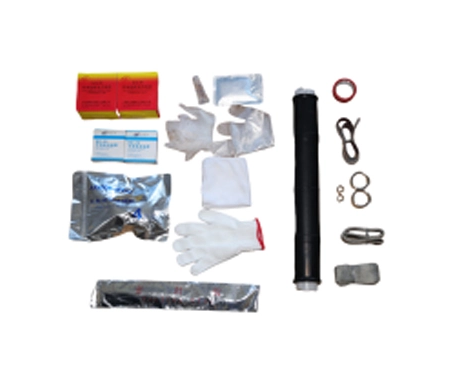
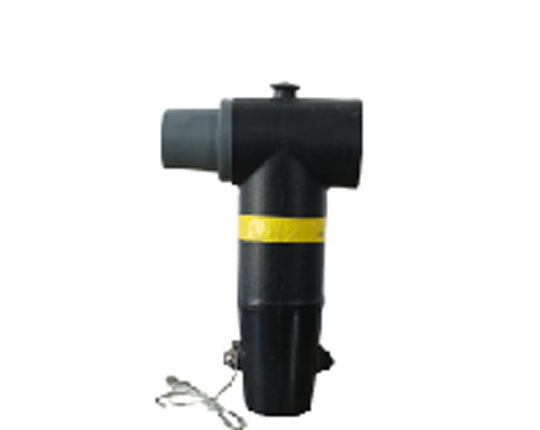
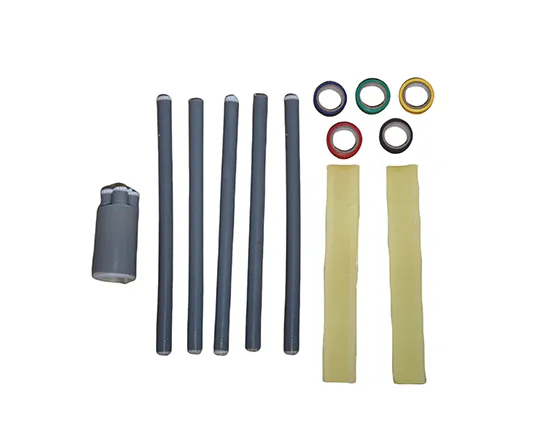
A cold shrink cable joint kit uses components that are factory-expanded onto a removable plastic core. During installation, the core is removed and the component contracts onto the cable under its own elastic tension—no heat source required.
Advantages in 2026 project conditions:
| Advantage | Why It Matters in 2026 |
|---|---|
| No torch or heat gun required | Eliminates hot-work permit requirements that delay installation on data center, petrochemical, and confined-space projects |
| Factory-expanded geometry | Consistent shrink force and geometry regardless of installer technique—reduces variability between crews |
| Weather-independent installation | Wind and rain do not affect the shrink process; installation can proceed in conditions that would compromise heat shrink quality |
| Faster mobilization | No heat source equipment to transport, power, or maintain on remote sites |
| Tight space performance | Uniform contraction without directional heat application works better in confined joint bays |
Constraints to acknowledge:
Higher unit cost than equivalent heat shrink kits
Core removal sequence must be followed correctly—incorrect removal distorts the body geometry
Size range per kit is typically narrower than heat shrink—confirm the kit's cable OD range covers your cable
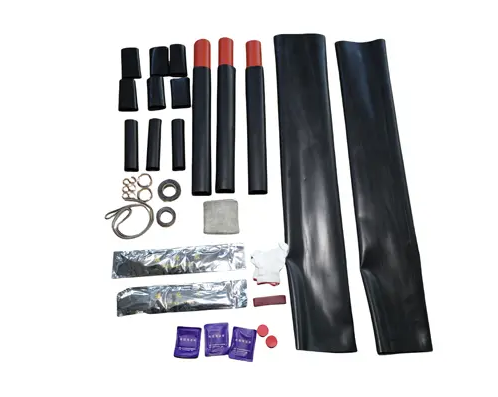
A heat shrink cable joint kit from reliable cable joint suppliers uses tubes and components that contract when heated with a torch or heat gun. The shrink process bonds the material to the cable surface, providing both mechanical retention and sealing.
Advantages:
| Advantage | Application Context |
|---|---|
| Lower unit cost | Cost-effective for large joint counts in controlled environments |
| Wide cable OD range per component | Can accommodate variation in cable outer diameter within the kit's stated range |
| Widely familiar to installation crews | Extensive installer experience base; training materials widely available |
| Strong mechanical shrink-down | When heated correctly, provides good mechanical retention and sealing |
Constraints in 2026 project conditions:
Requires a reliable heat source—torch or heat gun—and a power supply or gas supply on site
Installation quality is sensitive to heating technique: uneven heating produces uneven shrink, which creates voids and sealing failures
Wind and rain significantly affect heat shrink quality—outdoor installations in exposed conditions require weather protection measures
Hot-work permit requirements add administrative overhead and can delay installation on restricted sites
| Site Condition | Recommended Technology |
|---|---|
| Hot-work restrictions (data centers, petrochemical, confined spaces) | Cold shrink |
| Exposed outdoor sites with wind and rain | Cold shrink |
| Multiple crews with variable experience levels | Cold shrink |
| Rapid deployment with compressed schedule | Cold shrink |
| Controlled indoor environment (substation, workshop) with trained installers | Heat shrink acceptable |
| Large joint count with strong process control and cost pressure | Heat shrink with weather protection plan |
| Remote sites with limited power/gas supply | Cold shrink |
Selecting a cable joint kit based on technology preference without confirming the full specification produces the most common procurement failure in this category: a kit that is the right technology but the wrong size, wrong voltage class, or incompatible with the cable construction.
| Parameter | What to Confirm |
|---|---|
| System voltage (Um) | The kit must be rated for the system's maximum voltage; confirm Um against the kit's rated voltage class |
| Cable insulation | XLPE or EPR; the joint's insulation rebuild system must be compatible with the cable insulation material |
| Insulation screen type | Semiconducting screen type affects cutback geometry and stress control element selection |
Conductor material: copper or aluminum; aluminum requires specific connector materials and surface preparation to prevent oxidation at the contact interface
Screen type: copper tape, copper wire, or aluminum foil—each requires different screen connection hardware
Sheath and armor: confirm the kit's sealing system is compatible with the cable's outer sheath material; armored cables require additional mechanical protection at the joint entry
The connector is the component that carries the full load current across the joint—and it is the component where the most workmanship failures occur:
| Connector Type | Advantages | Requirements |
|---|---|---|
| Compression crimp | Reliable, low resistance when correctly crimped | Calibrated tooling; correct die selection |
| Shear-bolt mechanical | Tool-independent; field-adjustable | Torque verification; correct bolt shear confirmation |
| Mechanical (set-screw) | Simple installation | Torque specification must be followed |
Flooding risk: confirm the sealing system's water ingress resistance rating against the water table level at the installation site
Chemical exposure: coastal salt air, industrial chemicals, and soil contaminants require specific jacket and sealing material compatibility
Temperature range: confirm the kit's operating temperature range against the installation site's ambient and cable operating temperature
UV exposure: for outdoor above-ground installations, confirm UV resistance of the outer jacket material
A complete cable joint kit for a 2026 project should include:
Cutback dimension template or measurement guide
Step-by-step installation instructions with photographs
Batch traceability markings on all components
QA checklist support for commissioning documentation
Data center campus builds Data centers have strict hot-work permit requirements that make torch-based installation impractical in many areas. Cold shrink cable joint kit systems eliminate the permit requirement entirely, allowing installation to proceed without administrative delays.
Windy and wet outdoor sites Renewable energy plant collector circuits, offshore substation connections, and coastal infrastructure projects involve outdoor installation in conditions where uniform heating is difficult to control. Cold shrink's weather-independent installation process produces consistent results regardless of wind speed or precipitation.
Rapid deployment with multiple crews Projects with compressed schedules and multiple installation crews benefit from cold shrink's reduced sensitivity to installer technique. When the factory-expanded geometry does the work, the result is less dependent on individual crew skill level—reducing the variance that produces commissioning punch-list items.
Confined spaces and tight joint bays Underground joint bays, cable tunnel installations, and substation cable basement work often involve limited space for heat application. Cold shrink's uniform contraction without directional heat application performs better in these conditions.
Controlled indoor environments Substation cable basement work, workshop pre-assembly, and indoor industrial installations with trained crews and reliable power supply are the conditions where heat shrink performs most consistently. The controlled environment eliminates the weather sensitivity that creates problems on outdoor sites.
Projects with strong process control and cost pressure Large joint count projects where the installation team has extensive heat shrink experience, weather protection measures are in place, and the project has a strong QA process can use heat shrink cost-effectively. The key is that process control must compensate for the technology's sensitivity to technique.
At transition points, control cabinet entries, grounding and bonding connections, and auxiliary circuit interfaces, the wiring joints approach must be consistent with the main joint specification. Mixing technologies at interfaces—cold shrink main joints with heat shrink transition sleeves, for example—creates training complexity and spares management complications. Define the full jointing approach across the project before mobilization.
The most common cable joint kit failures are workmanship failures, not material failures. These controls reduce workmanship variability regardless of which technology is selected:
Preparation controls
Confirm cutback dimensions against the kit's installation instruction before cutting—incorrect cutback is the most common preparation error and cannot be corrected without starting over
Surface preparation of the insulation must follow the kit manufacturer's procedure; contamination at the insulation surface is a partial discharge initiation site
Connector installation controls
Use calibrated crimping tools for the specified die and conductor size; uncalibrated tools produce inconsistent crimp quality that is not visible externally
For shear-bolt connectors, confirm that all bolts have sheared correctly before proceeding
For aluminum conductors, remove oxide layer immediately before connector installation—oxide re-forms within minutes of exposure to air
Technology-specific controls
Cold shrink:
Remove the plastic core in the correct sequence specified in the installation instruction; incorrect removal sequence distorts the body geometry
Confirm the component has fully contracted before proceeding to the next step
Heat shrink:
Maintain correct torch distance and travel speed; overheating causes material degradation; underheating produces incomplete shrink with voids
Apply weather protection (tent or enclosure) for outdoor installations in wind or rain
Inspect each component for complete, uniform shrink before proceeding
Documentation controls
Photograph each completed installation stage for the commissioning QA record
Record batch IDs for all kit components against the joint location reference
Complete the QA checklist before backfill or closure—this is the documentation that protects the contractor in the event of a later dispute
Standardizing the cable joint kit type across a project or asset portfolio simplifies three operational requirements:
Spares planning: one kit type, one stock item, one reorder process
Training: one installation procedure for all crews; consistent skill development
Troubleshooting: when a fault occurs, the investigation starts from a known, consistent installation baseline
| TCO Factor | Cold Shrink Kit | Heat Shrink Kit |
|---|---|---|
| Unit cost | Higher | Lower |
| Installation time | Typically faster; less sensitive to conditions | Variable; weather and technique dependent |
| Hot-work permit cost | None | Administrative cost and delay on restricted sites |
| Rework risk | Lower; consistent factory geometry | Higher on exposed outdoor sites |
| Weather protection cost | None | Required for outdoor installations |
| Commissioning pass rate | Higher; consistent installation | Variable; technique-dependent |
| Fault location and repair cost | Avoided by lower failure rate | Higher if installation failures occur |
KPIs to track across a joint program:
Joint-related rework rate (target: below 2% of total joints installed)
Installation time per joint (benchmark against the kit manufacturer's estimated time)
Commissioning punch-list items related to jointing workmanship
Joint-related faults per circuit-km in the first year of operation
Cold shrink and heat shrink cable joint kit systems can both meet high-voltage project requirements—when correctly specified and installed. In 2026, the "best" kit is the one that matches your site constraints and minimizes rework risk across the entire build. For projects with hot-work restrictions, outdoor exposure, multiple crews, or compressed schedules, cold shrink's weather-independent installation and consistent factory geometry typically deliver better outcomes despite the higher unit cost. For controlled indoor environments with trained crews and strong process control, heat shrink remains a cost-effective option.
The decision framework is straightforward: define your site constraints first, then select the technology that minimizes the failure modes those constraints create. Align voltage class, cable construction, and connector specification before the first kit is ordered—and establish a photographic QA checklist before the first crew mobilizes.
Visit the product page and submit your details to receive a recommended specification and quotation:
View cable joint kit options and request a quote
To receive an accurate recommendation, submit the following:
Work conditions: indoor/outdoor, duct/direct burial, flooding risk, ambient temperature, weather exposure, hot-work restrictions
Quantity: pilot lot quantity and total project joint count
Size and spec: voltage class (kV), cable insulation type (XLPE/EPR), conductor material and size (Cu/Al, mm²/AWG), screen/sheath/armor construction, preferred connector type
Target metrics: installation time target per joint, rework rate target, service life requirement, compliance documentation needs
Current problems: moisture ingress, inconsistent installations across crews, limited joint bay space, hot-work permit delays, repeated faults, tool availability on remote sites
Q1: What is a cable joint kit?
A cable joint kit is a packaged set of components used to splice power cables while restoring the four functional elements required for safe high-voltage operation: electric field stress control at the cutback geometry, insulation rebuild to restore voltage withstand capability, metallic screen continuity for fault current return and EMI shielding, and environmental sealing to prevent moisture and contaminant ingress. A complete kit includes the stress control element, insulation rebuild components (cold shrink body or heat shrink tubes), conductor connector, screen connection hardware, sealing materials, and installation documentation.
Q2: How do cold shrink and heat shrink compare to resin/gel joints or pre-molded joints?
Resin and gel joints provide strong sealing for certain environments—particularly where irregular cable geometries or wet conditions make shrink-based sealing difficult—but require mixing and curing steps that add installation time and temperature sensitivity. Pre-molded joints offer highly consistent geometry but must match cable dimensions precisely, limiting their applicability across a range of cable sizes. Cold shrink and heat shrink cable joint kit systems are widely used because they balance field practicality with performance across a range of cable sizes and installation conditions. Selection among all four technologies should follow site constraints, cable construction, and project specification requirements rather than cost alone.
Q3: What ROI comes from choosing the right kit type?
ROI from selecting the correct cable joint kit technology for the site conditions is driven by avoided rework costs: reduced installation time, fewer commissioning failures requiring re-excavation, fewer outage events, and lower fault location and restoration costs. A single rework event on a buried joint—requiring re-excavation, joint replacement, and surface restoration—typically costs many times the price difference between a cold shrink and heat shrink kit. Track joint-related rework rate and commissioning punch-list items before and after standardizing the kit selection to quantify the ROI on your project.
Q4: Do we need to modify existing equipment or cable routes to switch kit types?
No equipment or cable route modifications are required in most cases. Switching between cold shrink and heat shrink cable joint kit systems is primarily a procedural change: different tools (no heat source for cold shrink), different installation sequence, and different training requirements. The main technical checks are confirming that the new kit's cable OD range covers the cables in the installation, that the connector type is compatible with the conductor material and size, and that the joint bay has adequate space for the kit's dimensions. Hot-work permit requirements are eliminated when switching from heat shrink to cold shrink, which is an administrative simplification rather than a complication.
Q5: What parameters should we provide for accurate selection and quoting?
To receive an accurate recommendation and quotation for a cable joint kit, provide: system voltage class (kV) and Um, cable insulation type (XLPE or EPR), conductor material and size (Cu or Al, mm² or AWG), cable construction details (screen type, sheath material, armored or unarmored), installation method (direct burial/duct/indoor/outdoor), environmental conditions (water table, chemical exposure, temperature range, weather exposure), hot-work permit restrictions, preferred connector type (compression crimp or shear-bolt mechanical), quantity by voltage class and conductor size, compliance documentation requirements, and the specific failure modes or workmanship problems you are trying to eliminate.