
The thermographic survey found a hot spot at 94°C on a 33kV cable termination that had been in service for fourteen months. The investigation found a compression lug correctly installed on a correctly sized conductor. The problem was everything around the lug: no stress control, no insulation rebuild, no environmental sealing. The installer had treated a medium-voltage termination like a low-voltage connection—lug on conductor, bolt to busbar, done.
The lug was fine. The termination was not.
In 2026, MV/HV projects are being built and upgraded under tighter timelines and higher reliability expectations—grid reinforcement, renewables tie-ins, industrial electrification—while owners demand cleaner commissioning records and fewer early-life failures. Yet many costly outages still trace back to interface mistakes that are entirely preventable: wrong termination type for the cable construction, inadequate stress control, contamination during installation, or the fundamental confusion between what a lug does and what a cable terminal does.
Understanding this distinction—and how it fits into the broader landscape of types of cable joints and terminations—helps engineers and contractors specify the right solution the first time, reducing rework after switchgear is energized and trenches are closed.
A cable lug is a metallic connector—compression crimped or mechanical—that attaches the cable conductor to a stud, palm, or busbar. Its function is electrical and mechanical: it provides a low-resistance, mechanically secure connection between the conductor and the equipment terminal.
In low-voltage applications, a lug is often the complete termination solution. The insulation system at low voltage does not require stress control or insulation rebuild—the cable's own insulation is adequate up to the point of connection.
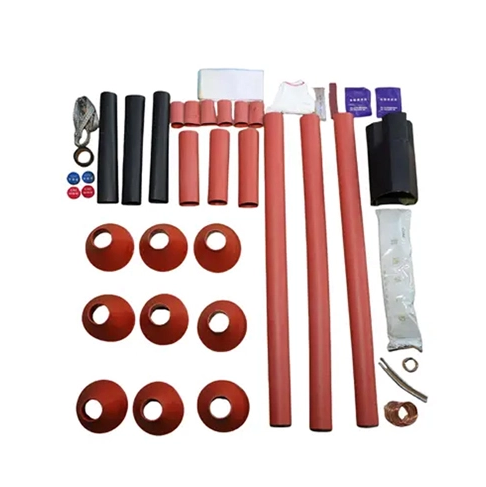
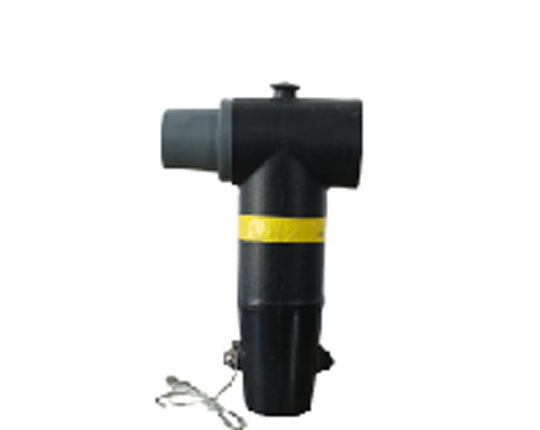
At medium and high voltage, the lug is one component of a larger system. A cable terminal is the complete termination accessory that manages everything the lug does not:
Electric field stress control When the cable's metallic screen is cut back to expose the conductor for connection, the geometric discontinuity creates an electric field concentration at the screen edge. Without stress control, this concentration causes tracking and partial discharge at operating voltage. The stress control element of the cable terminal—a stress cone, stress control tube, or stress relief mastic—redistributes the field to prevent this concentration.
Insulation rebuild The cable's insulation system is interrupted at the termination point. The cable terminal restores the dielectric strength required to withstand operating voltage, switching surges, and lightning impulses. The insulation rebuild system must be compatible with the cable's insulation material (XLPE or EPR) and must achieve the dielectric performance required by the applicable test standard.
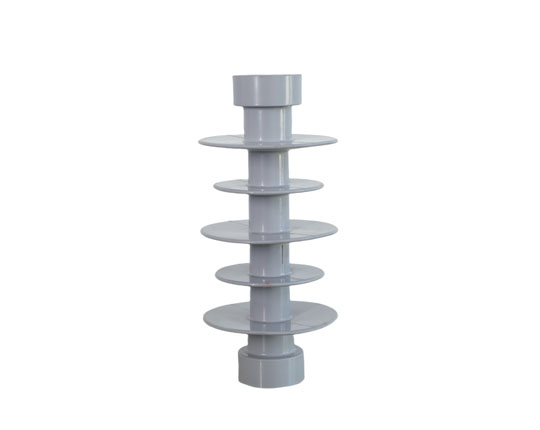
Environmental sealing For outdoor installations, the termination must prevent moisture, pollution, and contaminants from reaching the insulation interface. For indoor installations, sealing prevents moisture ingress during the cable's service life. A cable terminal provides this sealing through its outer housing, weather sheds (for outdoor use), and sealing system at the cable entry.
Screen and earth continuity The cable terminal re-establishes the metallic screen connection to the equipment earth, providing the fault current return path and maintaining the shielding that prevents electromagnetic interference.
| Function | Cable Lug | Cable Terminal |
|---|---|---|
| Conductor-to-equipment connection | ✓ | ✓ (includes or works with lug) |
| Electric field stress control | ✗ | ✓ |
| Insulation rebuild | ✗ | ✓ |
| Environmental sealing | ✗ | ✓ |
| Screen/earth continuity | ✗ | ✓ |
Installing a lug without a cable terminal on an MV/HV cable is not a cost saving—it is an incomplete installation that will develop partial discharge, tracking, or moisture-related failure within a predictable timeframe.
Specifying a cable terminal without confirming the full configuration produces the most common procurement failure in this category: a terminal that is the right technology but the wrong voltage class, incompatible with the cable construction, or inadequate for the installation environment.
| Parameter | What to Confirm |
|---|---|
| System voltage (Um) | The terminal must be rated for the system's maximum voltage; confirm Um against the terminal's rated voltage class |
| Cable insulation | XLPE or EPR; the terminal's stress control and insulation rebuild system must be compatible with the cable insulation material |
| Insulation screen type | Semiconducting screen type affects cutback geometry and stress control element selection |
| Technology | Advantages | Best Application |
|---|---|---|
| Heat shrink | Cost-effective; adaptable to varied cable ODs | Controlled indoor environments with trained installers |
| Cold shrink | No heat source required; consistent factory geometry; weather-independent | Outdoor sites, hot-work restricted areas, multiple crews |
| Pre-molded | Highest geometric consistency; fastest installation | Where cable dimensions are precisely known and consistent |
The technology selection should follow site constraints—hot-work permit requirements, weather exposure, crew skill mix, and tooling availability—not unit cost alone.
| Design Parameter | Indoor Terminal | Outdoor Terminal |
|---|---|---|
| Creepage distance | Standard | Extended; pollution class dependent |
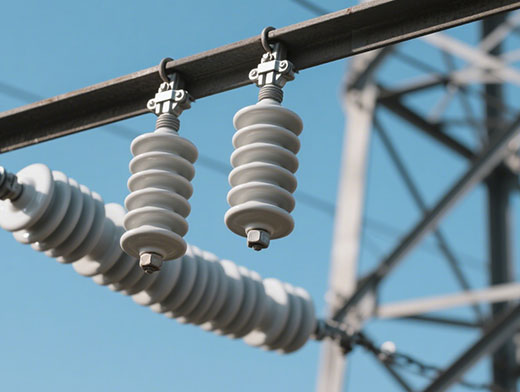
| Weather sheds | Not required | Required; shed profile and spacing per IEC standard |
| UV resistance | Not required | Required; confirm material UV stability |
| Moisture sealing | Standard | Enhanced; confirm sealing system for rain and condensation |
Conductor size range: confirm the terminal's stated conductor range covers your cable; a terminal used outside its rated range produces unreliable stress control geometry
Conductor material: copper or aluminum; aluminum requires specific lug materials and surface preparation
Lug/palm options: confirm the lug hole pattern and bolt size match the equipment stud or busbar
Phase spacing: confirm the terminal's installed dimensions fit within the available phase clearance in the switchgear or termination box
For 2026 project commissioning packages, confirm the terminal supplier can provide:
Batch traceability markings on all components
Step-by-step installation instructions with photographs
QA checklist support for commissioning documentation
Test standard reference (IEC 60502-4 or equivalent) for the terminal's type test data
Understanding where cable terminals fit within the broader landscape of types of cable joints and terminations helps engineers specify the correct accessory for each location in the cable system.
| Accessory Type | Function | Location |
|---|---|---|
| Cable joint | Splices two cable ends mid-run; restores insulation, stress control, screen continuity, and sealing across the splice | Mid-circuit, underground or in cable trays |
| Cable terminal (termination) | Finishes a cable end at equipment; restores insulation, stress control, screen continuity, and sealing at the connection point | Substation, switchgear, transformer, motor feeder |
A cable circuit typically has two terminations (one at each end) and one or more joints (where cable lengths are spliced). Both require stress control, insulation rebuild, screen continuity, and sealing—but the geometry and interface requirements are different.
Substations and switchgear rooms: cable entries to MV/HV switchgear panels; indoor terminations with standard creepage requirements
Transformer connections: cable terminations at transformer bushings; confirm bushing interface compatibility
Outdoor switchyards: cable entries to outdoor equipment; extended creepage and weather shed requirements
Motor feeders: MV motor cable terminations at motor terminal boxes; confirm space constraints and phase clearance
Renewable energy plant collector systems: multiple terminations at inverter stations and collector substations; repeatability across large termination counts is critical
| Failure Mode | Root Cause | Prevention |
|---|---|---|
| Partial discharge at screen edge | Incorrect stress control installation or positioning | Confirm cutback dimensions; follow installation instruction exactly |
| Tracking on insulation surface | Contamination during installation | Clean insulation surface per procedure; avoid touching with bare hands |
| Moisture ingress at cable entry | Incomplete sealing at the cable entry point | Complete all sealing steps in sequence; inspect before energization |
| Overheating at lug interface | Under-crimped lug or under-torqued bolt | Use calibrated crimping tools; verify torque at bolted connection |
| Flashover at outdoor terminal | Inadequate creepage for pollution class | Specify terminal with creepage distance appropriate for the site's pollution class |
Before specifying a cable terminal, confirm these parameters:
System voltage and environment: voltage class (kV) and Um; indoor or outdoor; pollution class for outdoor installations (IEC 60815 classification)
Cable construction: insulation type (XLPE/EPR), screen type (copper tape/wire/aluminum foil), sheath and jacket material, armored or unarmored
Conductor: copper or aluminum; size in mm² or AWG; stranding class (affects cutback geometry and lug selection)
Equipment interface: stud size and thread, palm hole pattern and bolt size, phase spacing and clearance constraints
Site constraints: hot-work permit restrictions, weather exposure during installation, crew experience level, available tooling
Preparation
Confirm cutback dimensions against the terminal's installation instruction before cutting—incorrect cutback is the most common preparation error and cannot be corrected without starting over
Clean the insulation surface per the manufacturer's procedure; contamination at the insulation surface is a partial discharge initiation site that is invisible after installation
Stress control installation
Position the stress control element at the exact location specified in the installation instruction; stress control that is incorrectly positioned may pass initial testing but will develop partial discharge over time
For heat shrink: maintain correct temperature and travel speed; for cold shrink: remove the core support in the correct sequence
Screen continuity and sealing
Verify screen connection hardware torque and continuity before proceeding to sealing
Complete all sealing steps in the correct sequence; partial sealing is a common omission when installation is interrupted
For outdoor terminals: confirm weather shed installation and sealing at the cable entry before energization
Lug installation
Use calibrated crimping tools for the specified die and conductor size
For aluminum conductors: remove oxide layer immediately before lug installation
Verify bolt torque at the equipment interface; under-torqued connections are the most common source of overheating at the bolted interface
Documentation
Photograph each completed installation stage for the commissioning QA record
Record batch IDs for all terminal components against the termination location reference
Complete the QA checklist before energization—this is the documentation that protects the contractor in the event of a later dispute
The unit cost of a cable terminal is a small fraction of the total cost of a termination failure:
| Cost Component | Impact |
|---|---|
| Fault location | Engineering time, test equipment, site access |
| Equipment damage | Switchgear or transformer damage from flashover or tracking |
| Outage cost | Lost production, penalty clauses, emergency restoration |
| Termination replacement | New terminal, installation labor, re-commissioning |
| Repeat mobilization | Second and third visits multiply all costs |
A cable terminal that costs more but reduces the probability of a single failure event delivers a strongly positive ROI in any MV/HV application.
Visual inspection
Check for tracking marks, surface contamination, and moisture ingress signs at the cable entry
Inspect weather sheds for cracking, UV degradation, or contamination buildup on outdoor terminals
Check for sheath damage or mechanical stress at the terminal entry point
Thermographic inspection
Periodic thermographic surveys of bolted lug interfaces identify developing overheating before it progresses to failure
Establish a baseline thermographic record at commissioning; compare subsequent surveys against the baseline
Record-keeping
Maintain installation batch IDs and commissioning test records for each termination
When a fault occurs, the installation record is the starting point for root cause analysis—without it, the investigation starts from zero
Reducing the number of cable terminal variants across a project or asset portfolio simplifies three operational requirements:
Spares planning: fewer part numbers, simpler stock management, faster emergency response
Training: one installation procedure for all crews; consistent skill development across the maintenance team
Future expansions: new cable circuits can be terminated with the same system, maintaining consistency across the asset
KPIs to track:
Termination-related failure rate per 100 terminations in service
Commissioning punch-list items related to termination workmanship
Thermographic anomalies per inspection cycle
Mean time to repair (MTTR) for termination-related faults
In 2026 HV connectivity, the lug-versus-terminal confusion still causes specification gaps that produce predictable, preventable failures. A lug alone cannot provide stress control, insulation rebuild, or environmental sealing—the three functions that determine whether a medium or high-voltage cable end survives its operating life or develops partial discharge, tracking, or moisture-related failure within the first few years of service.
Selecting the correct cable terminal—and aligning it with the broader types of cable joints and terminations used across your network—reduces commissioning delays and long-term outage risk. The specification work that makes this reliable happens before the first terminal is installed: confirmed voltage class, cable construction compatibility, equipment interface dimensions, and a photographic QA checklist for the installation team.
Visit the product page and submit your details to receive a recommended specification and quotation:
To receive an accurate recommendation, submit the following:
Work conditions: indoor/outdoor, humidity and pollution level, UV exposure, temperature range
Quantity: project total termination count and spares plan
Size and spec: voltage class (kV), cable insulation type (XLPE/EPR), conductor material and size (Cu/Al, mm²/AWG), screen/sheath/armor construction, equipment stud size and palm hole pattern
Target metrics: service life target, commissioning pass rate goal, outage-risk reduction objective
Current problems: tracking or flashover signs, moisture ingress, overheating at bolted interface, repeated failures, limited phase clearance
Q1: What is a cable terminal?
A cable terminal is a complete MV/HV termination accessory that finishes a cable end for connection to electrical equipment—switchgear, transformers, motors, or busbars. It restores the four functional elements that are interrupted at the cable end: electric field stress control at the screen cutback, insulation rebuild to restore voltage withstand capability, metallic screen continuity for fault current return and EMI shielding, and environmental sealing to prevent moisture and contaminant ingress. A cable terminal may include or be used in conjunction with a compression lug that provides the physical conductor-to-equipment connection.
Q2: How is a cable terminal different from a cable lug?
A cable lug is a metallic connector—compression crimped or mechanical—that attaches the cable conductor to a stud, palm, or busbar. Its function is limited to the electrical and mechanical conductor connection. A cable terminal is the complete termination system that manages stress control, insulation rebuild, screen continuity, and environmental sealing—functions that a lug alone cannot provide. In MV/HV applications, both are required: the terminal manages the high-voltage interface, and the lug provides the conductor-to-equipment connection within the terminal system.
Q3: What ROI comes from using the right cable terminal?
ROI from correctly specified cable terminals is driven by avoided failure costs: reduced outage frequency, less equipment damage from flashover or tracking events, fewer commissioning punch-list items, and lower troubleshooting and restoration costs. A single termination failure that causes switchgear damage or an extended outage typically costs many times the price difference between a correctly specified terminal and an under-specified one. Track termination-related failure rate per 100 terminations in service and commissioning punch-list items before and after standardizing the terminal specification to quantify the ROI.
Q4: Do we need to modify existing switchgear or cables to upgrade terminations?
In most cases, no. Upgrading to a correctly specified cable terminal is a procurement and installation practice change, not an equipment modification. The main technical checks are confirming that the terminal's conductor range covers the cable size, that the lug hole pattern and bolt size match the equipment stud, that the terminal's installed dimensions fit within the available phase clearance, and that the terminal technology (heat shrink, cold shrink, or pre-molded) is appropriate for the site conditions. Changes to the equipment interface may be required only when stud sizes or hole patterns differ from the terminal's standard lug options.
Q5: What parameters should we provide for accurate selection and quoting?
To receive an accurate recommendation and quotation for a cable terminal, provide: system voltage class (kV) and Um, cable insulation type (XLPE or EPR), conductor material and size (Cu or Al, mm² or AWG), screen type (copper tape/wire/aluminum foil), sheath and armor construction, installation environment (indoor/outdoor, pollution class for outdoor), equipment interface details (stud size, palm hole pattern, bolt size, phase spacing and clearance), preferred terminal technology (heat shrink/cold shrink/pre-molded), quantity and spares requirement, commissioning documentation requirements, and any current failure symptoms (overheating, tracking, moisture ingress, flashover).
This is the first one.