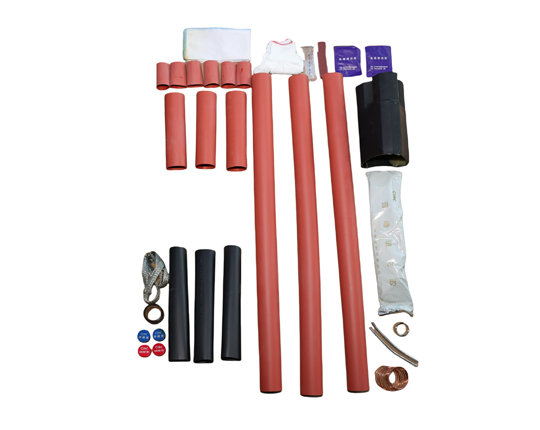

In the power transmission system, cable joints play a crucial role. They connect two segments of cable, thereby constructing a continuous power transmission channel. The design of these splices utilizes a multi-layer composite medium as the main insulation. The complexity of this structure inevitably increases the risk of insulation failure, making it a relatively vulnerable part of the entire cable system.
Apart from external factors that may cause equipment failure, the failure rate of these splices is as high as 50.87%. Since cable joints are often exposed to external environments, they may face various risks such as physical damage, material aging, and installation errors.
Once a cable system malfunctions, whether it be the cable itself or the insulation structure of the cable accessories, irreversible damage may occur. This not only affects insulation performance but could also trigger more severe secondary faults, even threatening the overall safety and stable operation of the power system.
During the installation of cable joints, the cable body needs to be stripped layer by layer, which inevitably disturbs the equipotential surface at the break of the outer semiconductive layer, leading to uneven electric field distribution. This uneven electric field may cause certain areas to have electric field concentration, forming high electric field intensity points in the semiconductor layer.
To mitigate this issue, structures such as stress cones are designed within the splices. These structures aim to smooth out the electric field distribution to prevent excessively high electric field intensities.
With such designs, the electric field can be stabilized, thereby reducing the risk of breakdown or other electrical issues near the cable joints, ensuring the reliability and long-term stability of the cable system.
Stress Cone Design: The purpose of the stress cone design is to smooth out the electric field distribution and prevent breakdown risks caused by electric field concentration. The size of the stress cone and the choice of insulation materials are crucial to ensuring that the internal electric field intensity remains below the breakdown field strength.
Parameter Adjustment: Adjusting design parameters, material characteristics, and the interface pressure of the stress cone can all affect the electric field distribution at the break of the semiconductive shield layer within the splice. Therefore, careful consideration of these factors is necessary when selecting cable joints.
The performance of cable joints directly impacts the safety and stability of the power transmission system. The following are the key performance characteristics that splices must possess:
Insulation Performance
Effective Isolation: Splices must effectively isolate cable conductors to prevent power leakage or breakdown, ensuring the safety of power transmission.
Voltage Withstand Capability: Splices need to have excellent voltage withstand capability to endure the normal voltage and potential overvoltage in the power system. During voltage withstand tests, insulation materials must withstand waveform changes and operational overvoltages to ensure they are not broken down. Mechanical Strength
Resistance to Physical Damage: Splices must be robust enough to withstand external physical damage and vibrations to maintain a secure connection under various environmental conditions.
Structural Stability: The mechanical strength of the splice should ensure that it does not deform or break during installation and operation.
Environmental Adaptability
High-Temperature Stability: Splices need to operate stably in high-temperature environments, ensuring that the materials do not deteriorate due to high temperatures.
Waterproof Performance: The sealing performance of the splice should meet the requirements of long-term immersion in water while also withstanding a certain degree of chemical corrosion to ensure long-term stable operation in various environments.
Reliability
Defect-Free Design: All internal components should be free from bubbles, scorching, and other harmful impurities. The inner and outer surfaces should remain smooth without scars, cracks, or protrusions.
Good Interface Bonding: The interface between insulation and semiconductive layers should bond well without cracks or delamination.
Stringent Testing: Before leaving the factory, all products must undergo rigorous routine tests for electrical, pressure, and other performance to ensure their performance and reliability.
The installation and maintenance of cable joints are key steps to ensure their long-term stable operation. Here are some important considerations:
Installation Process: During the installation of splices, strict adherence to operating procedures is required to ensure the accuracy of each step and avoid faults caused by installation errors.
Regular Inspections: Regular inspections and maintenance should be conducted on the splices to timely identify and address potential issues, preventing faults.
Environmental Protection: When used in harsh environments, additional protective measures such as protective covers or waterproof layers should be applied to extend the lifespan of the splice.