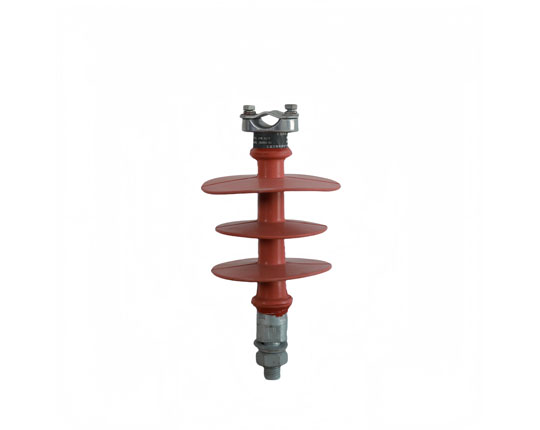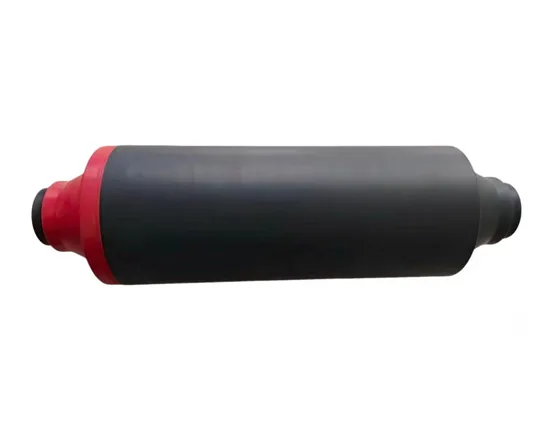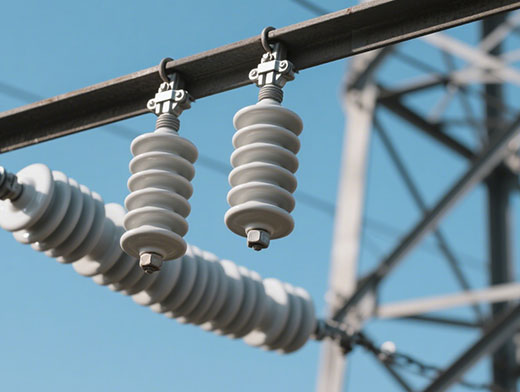

Enclosed GIS Terminals: When cables are directly connected to fully enclosed SF6 electrical equipment, enclosed GIS terminals should be selected.
Enclosed GIS Terminals or Oil-immersed Terminals: If the cable is directly connected to a high-voltage transformer, enclosed GIS terminals are recommended, but oil-immersed terminals can also be chosen based on the actual situation.
Plug-in Terminals: When the cable is connected to electrical equipment with integral plug functionality, plug-in terminals should be used, especially for cables with a voltage rating of 66kV and below. below.
Open Terminals: In situations other than the above, when the cable is connected to other electrical devices or conductors, open terminals should be selected.
When selecting the cable terminal structure type, the project's reliability requirements, installation, maintenance convenience, and economic feasibility need to be comprehensively considered.
Terminals connected to oil-filled cables must be able to withstand the highest working oil pressure that may occur.
The interface design of GIS terminals connected to fully enclosed SF6 equipment should fit in with each other, having a seal structure that completely isolates SF6 gas.
In flammable, explosive, or open-flame prohibited environments, cable terminals should be of a design type that operates without open flames.
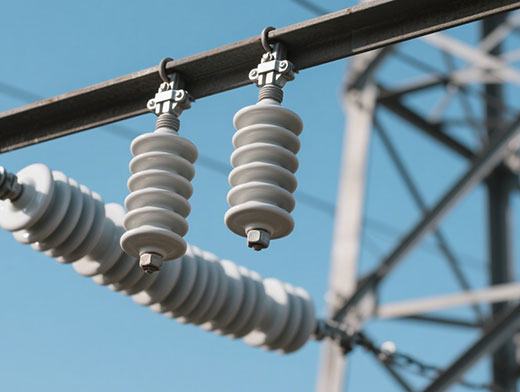
For areas with dense human population, high rainfall, high pollution, or heavy salt spray, it is recommended to use cable terminals with silicone rubber or composite bushings.
For 66kV to 110kV cross-linked polyethylene insulated cables, fully dry pre-fabricated designs are recommended for outdoor terminals.
When selecting cable terminal insulation characteristics, ensure that the terminal's rated voltage and insulation level are at least equivalent to the rated voltage and insulation requirements of the connected cable.
The external insulation design of the terminal should consider factors such as altitude and pollution level at the installation site to ensure compliance with mandatory creepage distance and air gap standards.
The mechanical strength of the cable terminal is also crucial and must withstand the tensile force, wind force, and seismic force at the installation site.
Plug-in Joints: When the height difference of self-contained oil-filled cable lines exceeds the standard and oil routes need to be separated, plug-in joints should be used.
Insulated Joints: For single-core cable lines where the length is sufficient and cross-interconnection grounding is adopted, in addition to effective disconnection and insulation treatment at the metal sheath connection positions, insulated joints should be used.
Through Joints: When the cable route distance exceeds the manufacturing length of the cable, through joints should be selected.
Y Joints: At the branching positions of cable routes, except for specific situations such as branched trunk cables or branching boxes, and ring main units in the cable network, Y joints should be used.
Conversion Joints: For direct connection of 3-core and single-core cables, conversion joints should be selected.
Transition Joints: When connecting extruded insulation cables with self-contained oil-filled cables, transition joints should be used.
When choosing the structure type of cable joints, the project's reliability, installation and maintenance convenience, and economic feasibility should be comprehensively considered and ensure compliance with relevant norms and standards.
For underwater cables, such as those under the sea, to ensure reliability, it is recommended to prioritize the use of joint-free whole cables. If it is not feasible due to special circumstances, factory joints should be chosen.
In environments that may be submerged in water, such as cross-linked polyethylene insulated cable joints of 3kV and above, a waterproof outer layer should be specially equipped to ensure waterproof performance.
In areas with no open flame requirements, heat-shrinkable cable joints, which may cause fire, should not be used.
For cross-linked polyethylene insulated cable routes with rated voltages from 66kV to 110kV, if reliability is highly required, tape-type joints should be avoided to ensure the safety and stability of the route.
The rated voltage and insulation level of cable joints must at least match the rated voltage and insulation requirements of the connected cables.
The withstand voltage of insulation joints, i.e., the voltage that both sides of the insulation ring within the insulation joint can bear, should be at least twice the insulation level of the sheath of the connected cables.
When arranging cable terminals and joints, ensure sufficient spacing for installation and maintenance, while adhering to the permissible bending radius of the cable and the configuration of expansion joints.
The design of terminal brackets should facilitate the installation of cables and their components. When the operating current exceeds 1500A, the bracket design should consider measures to prevent the closure of transverse magnetic circuits to reduce additional heating.
In areas near electrified transportation lines that may corrode the metal sheaths of cables, the joint arrangement should facilitate regular inspection and maintenance.
Rated Voltage of Cable Accessories:
The rated voltage of cable accessories should be expressed as Uo/U (Um) and should not be lower than the rated voltage of the cable.
Insulation Characteristics of Cable Accessories:
The insulation characteristics of cable accessories must meet the relevant requirements to ensure safety and performance.
In terms of mechanical strength and mechanical protection, cable accessories must strictly follow a series of relevant standards.
Outdoor terminals for high-voltage cables of 66kV and above must have sufficient mechanical strength to withstand environmental challenges such as wind forces and seismic levels, while also being able to endure a horizontal pull force of 2kN from the connected conductor.
For joints directly buried in soil, it is recommended to add a protective box. This protective box must be treated for corrosion prevention and be able to withstand road surface load pressure.
Cable Terminals Exposed to Air
When selecting cable terminal devices that are exposed to the air, specific environmental conditions should be considered.
For indoor environments not directly exposed to sunlight and rain, indoor terminals are recommended; for outdoor environments, outdoor terminals should be chosen to resist sunlight and rain.
When cables need to be connected to other electrical equipment via connecting lines, corresponding outdoor (or indoor) terminals should be selected.
For outdoor terminals of 66kV and above, a corona ring or shielding ring, base insulator should be equipped.
Cable Terminals Not Exposed to Air
When cable terminal devices are not exposed to air, selection should be based on specific conditions.
As high-pressure outlet interfaces of electrical equipment, device terminals such as oil-immersed terminals (directly connected to transformers) or separable connectors (for medium-voltage cables) are recommended.
If direct connection to SF6 gas-insulated metal-enclosed combination appliances is required, GIS terminals should be selected.
The types of cable joint devices are diverse and should be selected based on the purpose of the joint during design.
Through joints: Used to connect two cables to form a continuous circuit.
Insulated joints: Achieve conductor connection and disconnect the metal sheath, grounding shield, and insulation shield.
Plug-in joints: Suitable for separating oil passages in oil-filled cable lines.
Branch joints: Connect branch cables to trunk cables.
Transition joints: For connecting two different types of insulation materials or different types of cables.
Conversion joints: Connect cables with different numbers of cores.
Flexible joints: Can be factory-made to match the cable diameter, and have bending capabilities after production.
Cable Terminal Structure Types
When selecting the structure type of cable terminals, comprehensive considerations must be given to the cable's voltage level, insulation type, installation environment, and reliability requirements of the equipment, while adhering to economical and reasonable principles.
The tailpipe of the terminal must be equipped with grounding terminals to ensure safety.
For GIS terminals of oil-filled cables, a fully sealed structure capable of completely isolating cable oil from SF6 gas should be selected to ensure the safe operation of the cable.
Oil-filled cables or other pressurized terminals must be able to withstand the maximum allowed oil pressure of the cable to ensure the terminal's stability and durability.
Cable Joint Structure Types
When choosing the structure type of cable joints, a series of regulations should be followed, including but not limited to considerations of the cable’s voltage level, insulation type, installation environment, and reliability requirements of the equipment.
Conductor connections must ensure good conductivity and sufficient mechanical strength. If the cable is equipped with steel wire armor, its longitudinal continuity and mechanical strength must also be maintained.
Cable joints must have insulation strength and moisture-proof sealing performance equivalent to the cable body, while the sealing shell should also possess anti-corrosion characteristics.
In cable joints, it is recommended to use crimping methods to connect copper conductors.
Specific Structure Types of Cable Joints
10〜35kV Cable Joints: Depending on different insulation types and voltage levels, different structure types can be selected. These include wrapped joints, heat shrinkable joints, cold shrinkable joints, pre-fabricated joints, and molded joints.
66~500kV Cable Joints: Similar to the previous category, there are multiple structure types available depending on different insulation types and voltage levels. These include wrapped joints, whole pre-fabricated joints, and compound pre-fabricated joints.